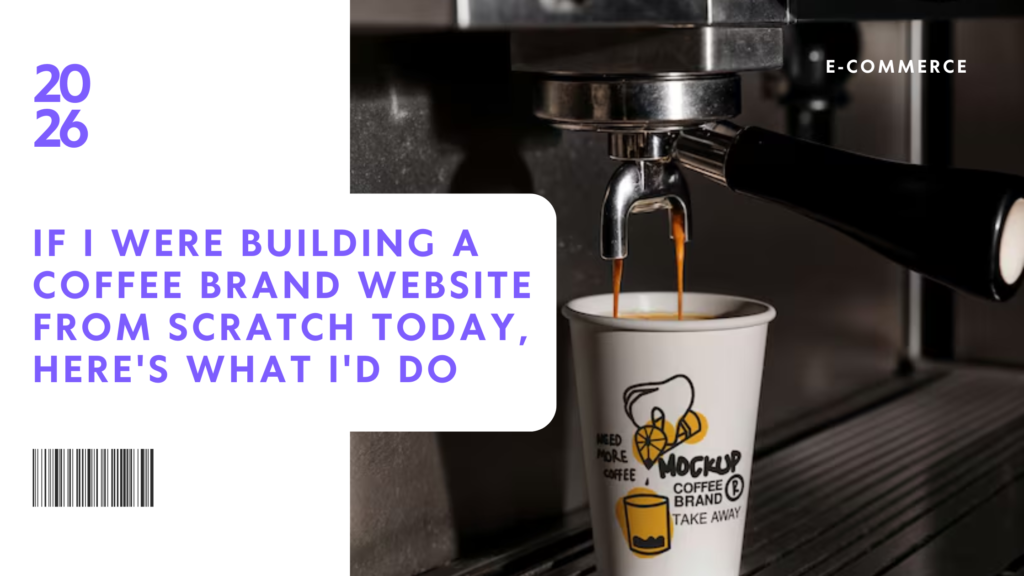
If I Were Building a Coffee Brand Website From Scratch Today, Here’s What I’d Do
Lessons from building Shopify stores for D2C brands – and what the data, the mistakes, and the wins actually taught us.We’ve built and rebuilt Shopify stores for D2C brands across categories – apparel, wellness, lifestyle, food. And over time, coffee has become one of the most interesting categories to work in. Not because it’s glamorous, but because the gap between how good the product is and how well the website sells it is almost always massive.
Founders obsess over the roast profile, the farm sourcing, the packaging. Then they build a website in two weeks and wonder why conversions are flat.
I’ve been on both sides of that. So if I were starting from zero today – building a Shopify store for a coffee brand – here’s what I’d actually do, and why.
The Website Is Not a Store. It’s a Ritual.
The first thing I’d fix is the mental model. Most founders think of the website as a place to list products and take orders. That’s not wrong, but it’s incomplete – especially for coffee.Coffee is one of the few products people interact with every single morning. It’s tied to identity, routine, mood. The brands that build loyal D2C customers understand this. They don’t just sell coffee – they sell a version of your morning. The website has to feel like that from the first scroll.
"When someone lands on your site, they should feel something before they see a price."
In practice, this means the homepage hero isn’t a product grid. It’s an image that looks like 7am on a good day – steam, light, stillness. Below that, a line that explains why this coffee exists, in plain language. Not ‘premium single-origin arabica’. Something that sounds like a human wrote it.
This sounds like brand work. It is. But it’s also conversion work. The brands we’ve seen convert best don’t lead with product – they lead with feeling, then earn the right to sell.
The About Page Is Your Most Underused Sales Page
Every coffee brand has an About page. Almost none of them use it properly.Here’s what most of them say: ‘We are passionate about coffee. We believe in quality and sustainability. Our beans are sourced from the finest estates.’ It’s the same paragraph, written a thousand times, meaning nothing.
Here’s what the ones that actually convert say: the founder’s real story. Why they couldn’t find the coffee they wanted. The trip to Coorg that changed how they thought about sourcing. The roaster who taught them everything over a week in Chikmagalur. The specific, textured, human version not the sanitised brand narrative.
When we rebuild About pages with this level of specificity, time-on-page goes up and bounce rates drop. Not because we added more content – because we added something real. For a category like coffee where trust and provenance matter enormously, the founder’s story is a conversion tool. Treat it like one.
The Product Page Does the Job the Founder Can’t
In a physical store or a cafe, you’d describe the coffee. You’d tell someone it tastes like dark chocolate with a dry finish, that it works best as a French press, that it’s from a 6th-generation farming family in the Nilgiris. The website has to do that job in your absence.Most product pages don’t. They say ‘250g, Medium Roast, Rs 499’. That’s a warehouse catalogue entry, not a description that makes someone pull out their card.
What I’d build instead: a page that tells you where this specific coffee came from, what it tastes like in plain language (not flavour chemistry – sensory experience), how to brew it, and why it’s worth buying over the one sitting next to it. Every product page should answer the question a curious, interested buyer would ask if they were standing in front of you.
"The product page is your best salesperson. Most brands leave it mute."
One thing that consistently lifts conversion: specificity about freshness. ‘Roasted to order’ or a visible roast date tells the buyer something they actually care about – that this coffee will be fresh when it arrives. That one detail outperforms most discount offers we’ve tested.
Subscriptions Are the Business Model. Build the Site Around Them.
Single purchases pay for today. Subscriptions build the company.The mistake most coffee brands make is treating subscriptions as an option – buried in a sidebar, mentioned after the regular price, easy to miss. That’s backwards. If subscriptions are how you build a sustainable D2C business (and they are), then the entire site architecture should guide people toward them.
When we restructure a store to lead with subscriptions – making the frequency selector prominent, showing the per-order savings clearly, adding simple pause and skip options – the conversion rate on subscription sign-ups climbs meaningfully. Not because we added a feature, but because we stopped hiding the thing the brand actually wants people to do.
Easy pause and skip also matters more than most founders think. The thing that stops people subscribing isn’t price – it’s fear of being trapped. Remove that fear visibly, and more people opt in.
The Stuff That Quietly Kills Sales
A few things that come up on almost every audit not dramatic failures, just quiet friction that compounds into significant revenue loss.Forced account creation at checkout. Still happening. Still costing sales. Guest checkout should always be the default.
No COD option. For Indian D2C, especially for first-time buyers, COD is still a significant conversion lever. Removing it to simplify operations is a real trade-off – and usually the wrong one at early stage.
Shipping cost revealed at the last step. If someone has spent three minutes on your site, added something to cart, and then discovers a Rs 80 shipping fee at checkout – the sale is often gone. Show it early, or absorb it into pricing above a reasonable threshold.
Mobile load time. Most coffee discovery happens on Instagram and mobile. If your site takes more than three seconds to load on a phone, you’re losing a percentage of every rupee you spend on ads before the page even opens.
Where I’d Actually Start
If I were doing this from scratch, I wouldn’t start with the homepage. I’d start with the product page and the About page because those are where purchase decisions actually get made, and both can be fixed without a full redesign.Get the product pages right: origin, flavour, freshness, brew method. Get the About page right: real story, real founder, real reason this coffee exists. Then build the subscription architecture. Then worry about everything else.
"The brands that win D2C coffee don’t have better ads than everyone else. They have a website that does the selling once the ad brings someone in."
That’s the gap most coffee founders haven’t closed yet. And it’s the most fixable one.